












How Are Glass and Aluminum Frames Assembled During Production?
The assembly process depends on the type of aluminum door or window, but it generally involves preparing the frame, installing seals and hardware, fitting the glass, and checking the finished unit.
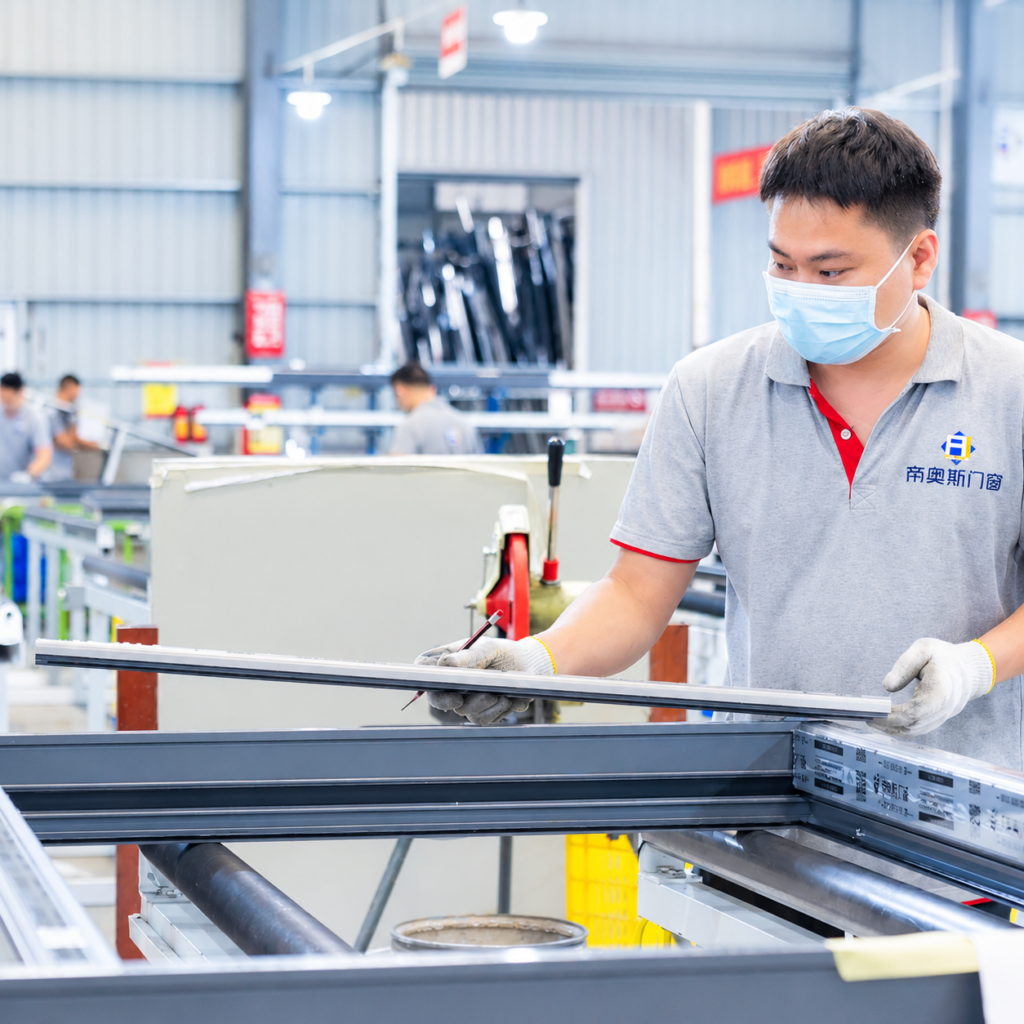
After aluminum profiles are cut and machined, the frame components are connected using the specified corner and structural joining methods. Sealing components are then installed in the appropriate locations to improve air and water resistance.
Glass selection and installation are also important. Depending on the project requirements, manufacturers may use clear glass, tempered glass, laminated glass, Low-E glass, tinted glass, or insulated glass units.
The glass must be correctly positioned inside the frame with appropriate setting blocks, gaskets, sealants, or other fixing components. Incorrect positioning can create excessive stress on the glass or affect the operation of the finished product.
After assembly, the manufacturer should check whether the door or window opens and closes smoothly, whether the glass is correctly positioned, whether the frame is properly aligned, and whether visible gaps or sealing problems are present.
For customized architectural projects, the assembly process should follow the approved shop drawings and product specifications rather than relying solely on standard factory procedures.